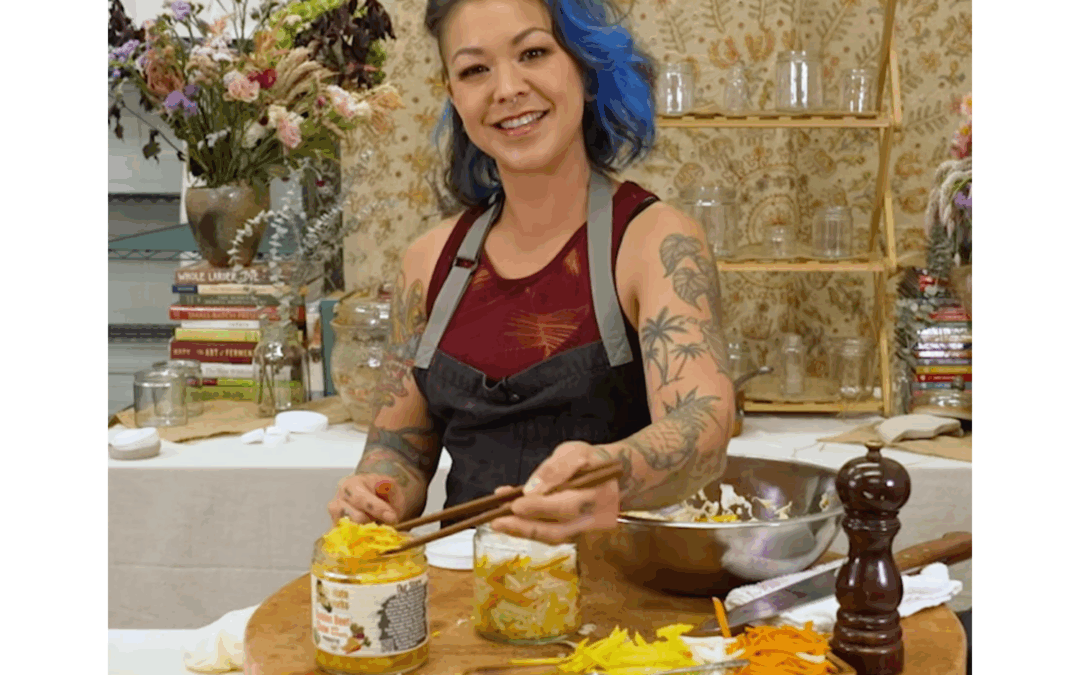
by Sam Paone of Golden State Pickle Works, Collective Cultures, and Jarring Everything
Ingredients
10 ounces Green Cabbage
0.56 ounces salt (or a heaping Tablespoon)
Equipment
Instructions
1. Make sure to start with a clean working surface and a sanitized jar. Running the jar through your dishwasher cycle is sufficient, but a quick swipe of food-grade sanitizer is a great option.
2. Remove a thin outer leaf from the cabbage and set it aside. Slice green cabbage thinly – it doesn’t really matter how thin you slice it, as long as it’s sliced the same width – this keeps timing consistent. Feel free to use the entire vegetable, core included.
3. Grate the carrots, kohlrabi, golden beets and turmeric.
4. In a medium sized bowl, add salt to sliced cabbage and start to crush the cabbage with the salt. Massage for a few minutes, until you see the cabbage start to glisten (this is the salt replacing the water in the cabbage, helping release it from the fibers of the cabbage), and start to wilt a little.
5. Gently fold in the beets, kohlrabi, carrots, turmeric and black pepper, massaging a little to help break down the added vegetables. There should be a little pool of liquid in your bowl, this is what you want.
6. Tightly pack your sanitized jar with the wilted slaw, covering with the liquid that developed through massaging. This brine is what protects the vegetables from drying out and spoiling. Important: make sure the jar is packed without air pockets – oxygen is where unwanted mold and bacteria can develop, so its important to press the oxygen gaps out.
7. Place that reserved piece of cabbage leaf directly on top of the surface and press until the brine covers the slaw, and place the cheesecloth directly on that, if using.
8. Place the jar lid and close half-way. Doing this allows gasses to escape through fermentation but keeps oxygen from seeping in. Wipe the jar clean, and place on a plate on your kitchen counter for about 7-10 days, tasting it regularly after 5 days.
You’ll start to notice the vegetables start to expand over the first few days – this is proof of it becoming active. Open the jar and press the vegetables back below the brine level to ensure no mold growth (I don’t do this, it’s not necessary, but will keep everything pretty and nice). This is completely natural – the bacteria growing is eating sugars and starches, creating lactic acid. This acid will preserve the slaw, while creating beneficial enzymes, B vitamins, omega-3 fatty acids and various strains of probiotics.
9. After about 5-7 days, start tasting the slaw / now turning into sauerkraut. Once it starts to taste like a pickle, it’s done. You can age it as long as you’d like, remembering the longer it stays out at room temperature, the texture mellows out and the tanginess increases. I prefer my krauts crispy and mild, so 7 or 8 days is plenty for me.
10. Once it’s at a texture and flavor you like, remove the cheesecloth and tighten the lid before placing it in your refrigerator, where it will keep for a year or so.
Enjoy a pinch on Merguez Lamb Sliders, garnish your next Hummus Platter or simply open a can of tuna and a can of beans, and top with the kraut and sprouts.
See Sam in episode 11 of Jarring Everything, where you can watch this process from start to finish.
If watching Jarring Everything inspires a trip to a Napa or Sonoma Farmers Market, here’s a list. You can find Sam, Golden State Pickle Works and Collective Cultures products at the Sonoma Valley Certified Farmers Market and the Napa Farmers Market. And they’re available online via the website.